When building or optimising a website, you naturally focus on headline creation, keyword optimisation, and backlink acquisition. However, one foundational element often gets overlooked: URL structure.
A well-crafted URL does more than direct a user’s browser to a specific page; it serves as a critical roadmap for search engine crawlers, helping them understand your page before they even read the content.
In this comprehensive guide, the digital marketing experts at Odyssey New Media break down what a URL structure is, why it matters for search engine optimisation (SEO), and how you can craft SEO-friendly URLs that drive traffic and conversions.
A URL (Uniform Resource Locator) is the web address used to specify the location of a resource on the internet. A clean, standard URL is made up of several distinct parts:
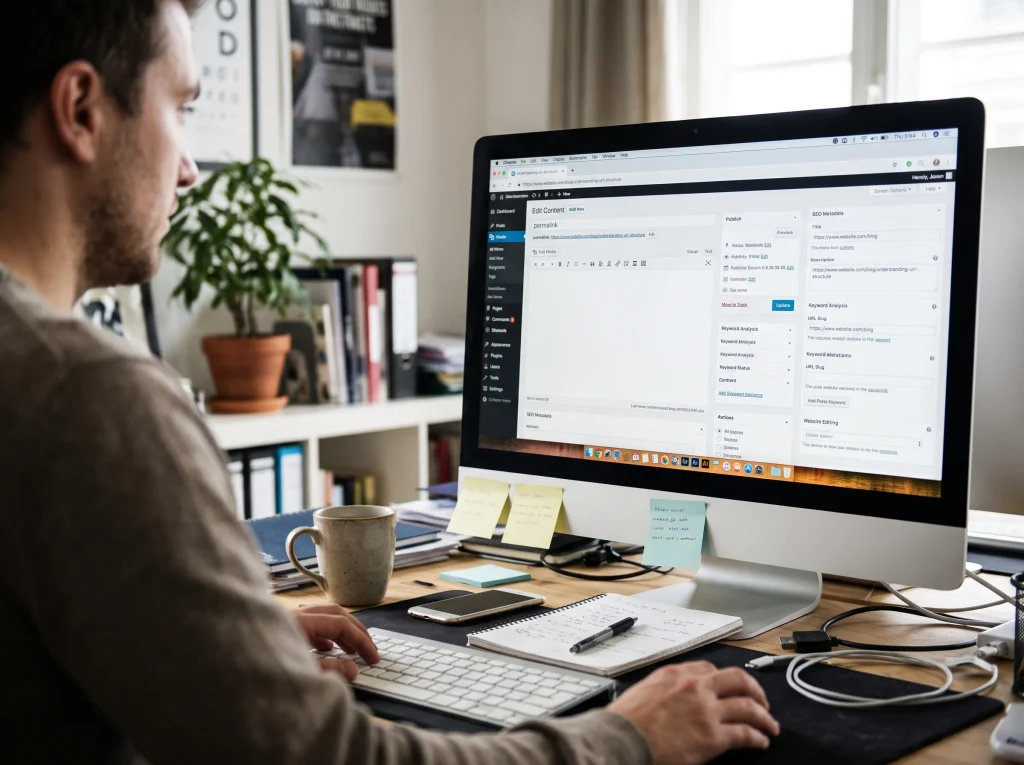
Yes, absolutely. While a URL structure might not carry the same heavy ranking weight as high-authority backlinks or exceptional content, it plays a vital role in how search engines crawl, index, and rank your website.
Here is why your URL structure matters directly to your SEO performance:
1. Search Engines Use URLs to Understand Content
Search engine crawlers (like Googlebot) read URLs to quickly determine what a webpage is about. A descriptive URL provides immediate context. For example, a search engine can easily deduce the focus of a URL structured around services and web design, whereas a messy, auto-generated parameter string full of numbers and symbols is harder to interpret.
2. Improved User Experience (UX) and Trust
A clean URL tells human visitors where they are on your site and where they can go next. If a user sees a cluttered, spam-looking URL full of random numbers and special characters, they are less likely to click on it in the Search Engine Results Pages (SERPs). High click-through rates (CTR) indirectly support better organic performance.
3. Shareability and Social Proof
Clean, readable URLs are easier to copy, paste, and share across social media, emails, and other websites. When people share links without messy tracking parameters or code anomalies, it encourages natural link acquisition.
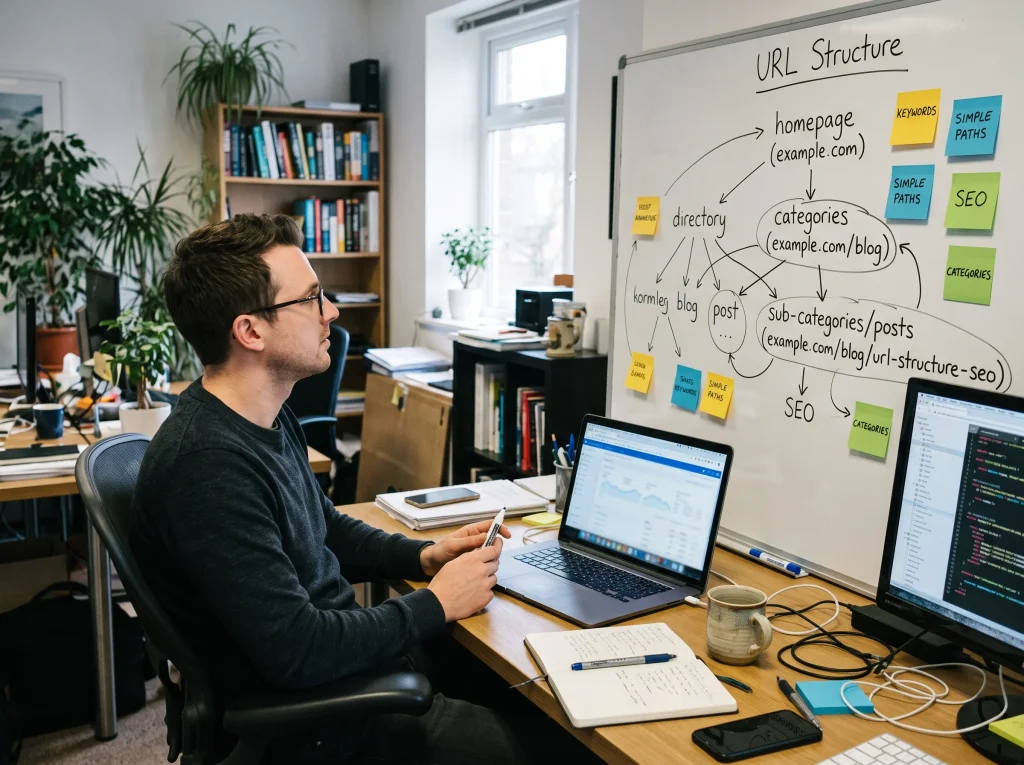
If you want your website architecture to support your broader SEO strategy, follow these core optimisation rules:
Keep It Simple and Readable
URLs should be instantly understandable for humans. Avoid convoluted naming conventions or nesting pages too deep in unnecessary subfolders. Use straightforward category paths instead of complex query strings.
Include Your Target Keywords
Incorporate your primary keyword or phrase into the URL slug. This reinforces the page’s topic for search engines. Keep it concise; don’t stuff multiple keywords into a single URL.
Use Hyphens to Separate Words
Always use hyphens (-) to separate words in your URLs. Avoid underscores (_), spaces, or camelCase. Google reads hyphens as natural word separators, while underscores can cause search engines to treat words as one.
Stick to Lowercase Letters
URL paths are often case-sensitive on various server environments (like Linux). Using uppercase letters can occasionally lead to duplicate content issues or messy 404 errors if users or other sites link to a mixed-case version. Always configure your site to enforce lowercase URLs.
Avoid Dates and Numbers (Unless Necessary)
Unless you are running a news publication or a blog where publishing cadence is critical, avoid putting years or dates in your URLs. If you update an evergreen piece of content next year, a date in the URL can make your content look instantly outdated to users scanning the SERPs.
Minimise Stop Words
Drop unnecessary stop words such as and, the, of, to, a, unless they are vital to the context of the URL. Keeping URLs lean keeps them punchy and memorable.
Your URL structure serves as the digital backbone of your website. Keep URLs clean, keyword-focused, and logically organised to support smoother crawling, better user engagement, and sustainable search visibility.
Contact our Digital Marketing Strategy specialists, who have the knowledge and expertise to fully optimise your social media and website, helping you increase leads and conversions.
Call our team on 0121 439 5450; alternatively, fill out our contact form.